

Shoulder Belt Height Adjuster
The vehicle has a shoulder belt height adjuster for the driver and right front passenger.
Adjust the height so the shoulder portion of the belt is on the shoulder and not falling off of it. The belt should be close to, but not contacting, the neck. Improper shoulder belt height adjustment could reduce the effectiveness of the safety belt in a crash. See How to Wear Safety Belts Properly on page 3‑13.

Regular and Crew Cab
To move the adjuster down for the regular and crew cabs, squeeze the buttons (A) on the sides of the height adjuster and move the height adjuster to the desired position.
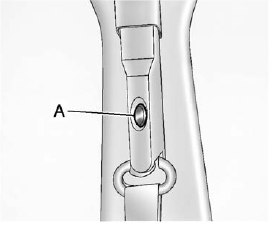
Extended Cab
On the extended cab, push down on the release button (A) and move the height adjuster to the desired position.
You can move the adjuster up just by pushing up on the shoulder belt guide.
After you move the adjuster to where you want it, try to move it down, without squeezing the buttons for the regular and crew cabs, or without pushing the release button for extended cabs, to make sure it has locked into position.
See also:
Driving with a Trailer
WARNING
When towing a trailer, exhaust gases may collect at the rear of the vehicle and enter if the liftgate, trunk/hatch, or rear-most window is open.
Engine exhaust contains Carbon Monoxide (CO) ...
When the System Does Not Seem to Work Properly
The following messages may be displayed on the DIC:
SERVICE PARK ASSIST: If this message occurs, take the vehicle to your dealer to repair the system.
PARK ASST BLOCKED SEE OWNERS MANUAL: This messa ...
Sensors
The solar sensor, located in the defrost grille in the middle of the instrument panel, monitors the solar heat. Do not cover the solar sensor or the system will not work properly.
The interior te ...