

Child Restraint Systems
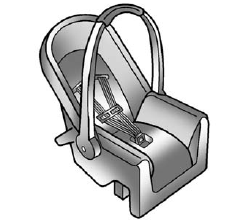
(A) Rear-Facing Infant Seat
A rear-facing infant seat (A) provides restraint with the seating surface against the back of the infant.
The harness system holds the infant in place and, in a crash, acts to keep the infant positioned in the restraint.
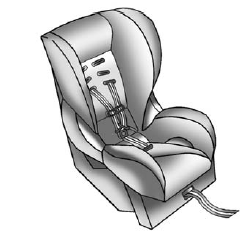
(B) Forward-Facing Child Seat
A forward-facing child seat (B) provides restraint for the child's body with the harness.
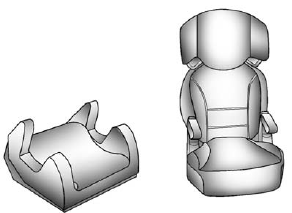
(C) Booster Seats
A booster seat (C) is a child restraint designed to improve the fit of the vehicle's safety belt system.
A booster seat can also help a child to see out the window.
See also:
Doors Liftgate
WARNING
Exhaust gases can enter the vehicle if it is driven with the liftgate or trunk/hatch
open, or with any objects that pass through the seal between the body and the trunk/hatch
or liftgate. ...
TPMS Malfunction Light and Message
The TPMS will not function properly if one or more of the TPMS sensors are missing or inoperable. When the system detects a malfunction, the low tire warning light flashes for about one minute and the ...
StabiliTrak® OFF Light
This light comes on briefly while starting the engine.
If it does not, have the vehicle serviced by your dealer. If the system is working normally, the indicator light then goes off.
Press and rel ...