


Power Seats
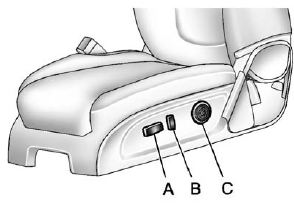
Power Seats
A. Seat Adjustment Control
B. Seatback Control
C. Lumbar Control
To adjust a power seat, if equipped:
• Move the seat forward or rearward by sliding the control (A) forward or rearward.
• Raise or lower the entire seat by moving the control (A) up or down.
• Adjust the seatback by tilting the top of the control (B) forward or rearward.
See Reclining Seatbacks on page 3‑5.
• Increase or decrease lumbar support by pressing the front or rear of the control (C).
See Lumbar Adjustment on page 3‑4.
See Power Seat Adjustment on page 3‑4 for more information.
See also:
Security
OnStar provides services like Stolen Vehicle Assistance, Remote Ignition Block, and Roadside Assistance, if the vehicle is equipped with these services. OnStar can unlock the vehicle doors remotely, i ...
Replacing Airbag System Parts after a Crash
WARNING
A crash can damage the airbag systems in the vehicle.
A damaged airbag system may not work properly and may not protect you and your passenger(s) in a crash, resulting in serious injury or e ...
TTY Users
OnStar has the ability to communicate to the deaf, hard&-ofhearing, or speech&-impaired
customers while in the vehicle. The available dealer&-installed TTY system can provide
in-vehicl ...