

Voltmeter Gauge
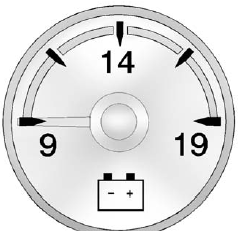
This gauge indicates the battery voltage when the ignition is turned on.
When the ignition is on, this gauge indicates the battery voltage.
When the engine is running, this gauge shows the condition of the charging system. The gauge can transition from a higher to lower or a lower to higher reading. This is normal. If the vehicle is operating outside the normal operating range, the charging system light comes on.
See Charging System Light on page 5‑24 for more information. The voltmeter gauge may also read lower when in fuel economy mode.
This is normal.
Readings outside the normal operating range can also occur when a large number of electrical accessories are operating in the vehicle and the engine is left idling for an extended period. This condition is normal since the charging system is not able to provide full power at engine idle. As engine speeds are increased, this condition should correct itself as higher engine speeds allow the charging system to create maximum power.
The vehicle can only be driven for a short time with the readings outside the normal operating range. If the vehicle must be driven, turn off all accessories, such as the radio and air conditioner.
Readings outside the normal operating range indicate a possible problem in the electrical system.
Have the vehicle serviced as soon as possible.
See also:
Other Rainy Weather Tips
Besides slowing down, other wet weather driving tips include:
• Allow extra following distance.
• Pass with caution.
• Keep windshield wiping equipment in good shape.
• Keep the windshield ...
Detecting the Vehicle Ahead
The green vehicle ahead indicator will appear when a vehicle is detected ahead.
Whenever this indicator does not appear, FCA will not respond. The indicator may
disappear on curves, highway exit ...
Traction Control System (TCS)
The vehicle has a Traction Control System (TCS) that limits wheel spin. On a
front-wheel-drive vehicle, the system operates if it senses that one or both of
the front wheels are spinning or beginn ...