


Front Seats
The front seats have adjustable head restraints in the outboard seating positions.
WARNING
With head restraints that are not installed and adjusted properly, there is a greater chance that occupants will suffer a neck/ spinal injury in a crash. Do not drive until the head restraints for all occupants are installed and adjusted properly.
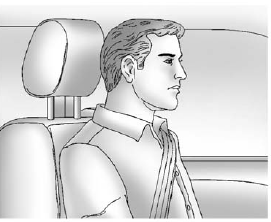
Adjust the head restraint so that the top of the restraint is at the same height as the top of the occupant's head. This position reduces the chance of a neck injury in a crash.
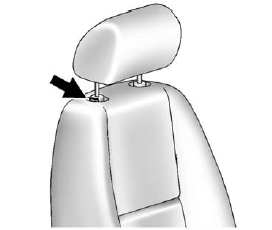
The height of the head restraint can be adjusted. Pull the head restraint up to raise it. Try to move the head restraint to make sure that it is locked in place.
To lower the head restraint, press the button, located on the top of the seatback, and push the restraint down. Try to move the head restraint after the button is released to make sure that it is locked in place.
The front seat outboard head restraints are not designed to be removed.
See also:
Passenger Sensing System
The vehicle has a passenger sensing system for the right front passenger position.
The passenger airbag status indicator will be visible on the overhead console when
the vehicle is started.
Uni ...
OnStar®
If the vehicle is equipped with an active OnStar system, that system may also record data in crash or near crash-like situations.
The OnStar Terms and Conditions provides information on data collecti ...
Storing a Radio Station as a Favorite
To store a station as a favorite:
1. Tune to a radio station.
2. Press the FAV button to display the page where the station will be stored.
3. Press and hold one of the six softkeys until a beep so ...