

Child Restraint Systems
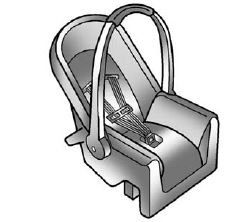
(A) Rear-Facing Infant Seat
A rear-facing infant seat (A) provides restraint with the seating surface against the back of the infant.
The harness system holds the infant in place and, in a crash, acts to keep the infant positioned in the restraint.
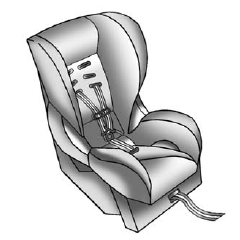
(B) Forward-Facing Child Seat
A forward-facing child seat (B) provides restraint for the child's body with the harness.
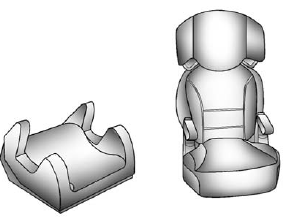
(C) Booster Seats
A booster seat (C) is a child restraint designed to improve the fit of the vehicle's safety belt system.
A booster seat can also help a child to see out the window.
See also:
Where Are the Airbags?
The driver frontal airbag is in the middle of the steering wheel.
The right front passenger frontal airbag is in the instrument panel on the passenger
side.
Driver Side Shown, Passenger Side ...
Express-open/Express-close
Press and release the front or rear of the driver side switch to express-open
or express-close the sunroof. ...
Tire Pressure Light
For vehicles with the Tire Pressure Monitor System (TPMS), this light comes on briefly when the engine is started. It provides information about tire pressures and the TPMS. ...