


Front Seats
The front seats have adjustable head restraints in the outboard seating positions.
WARNING
With head restraints that are not installed and adjusted properly, there is a greater chance that occupants will suffer a neck/ spinal injury in a crash. Do not drive until the head restraints for all occupants are installed and adjusted properly.
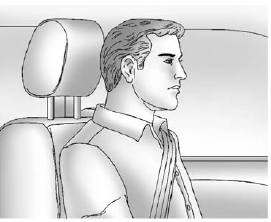
Adjust the head restraint so that the top of the restraint is at the same height as the top of the occupant's head. This position reduces the chance of a neck injury in a crash.
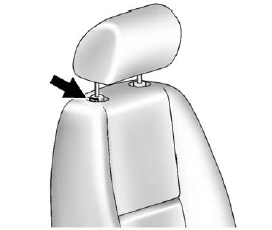
The height of the head restraint can be adjusted. Pull the head restraint up to raise it. Try to move the head restraint to make sure that it is locked in place.
To lower the head restraint, press the button, located on the top of the seatback, and push the restraint down. Try to move the head restraint after the button is released to make sure that it is locked in place.
The front seat outboard head restraints are not designed to be removed.
See also:
Trailer Brakes
A loaded trailer that weighs more than 450 kg (1,000 lbs) needs to have its own brake system that is adequate for the weight of the trailer. Be sure to read and follow the instructions for the trailer ...
Trip/Fuel Menu Items (with DIC Buttons)
(Trip/Fuel): Press this button to scroll through the following menu items: ...
Environmental Concerns
• Always use established trails, roads, and areas that have been set aside for public off-road recreational driving and obey all posted regulations.
• Do not damage shrubs, flowers, trees, or gra ...